
How a historic bateau plongeur ran aground in the Strath Taieri.
THE TOWN OF MIDDLEMARCH IS 80 KILOMETRES FROM THE NEAREST BEACH. IT’S SO DRY IN SUMMER THE CLIMATE IS CLASSED AS “DESICCATING”. THERE ARE DUST STORMS. YET THERE, TUCKED AWAY ON ABERAFON STREET OFF THE MAIN DRAG, SITS AN EXTRAORDINARY SLICE OF NEW ZEALAND MARITIME HISTORY.

Rusted and riveted, it looks like a lost phrase from a Jules Verne novel. You can almost smell the salt. It’s what remains of the Platypus, Aotearoa’s first, and only, submarine.
The Platypus was designed by the French scientist, and “bateau plongeur” inventor, Antoine-Prosper Payerne, and built in Dunedin by the Sparrow engineering firm. Only a few were ever made, and the Middlemarch version is thought to be one of the only, if not the only, remaining example in the world.
This one was a prototype for a Gold Rush-era get rich quick (or at least get rich eventually) scheme. The idea was to use the submersible to dredge gold from the bottom of the auriferous Clutha River. There were two hatches: an entrance hatch on top, and another on the bottom for access to the riverbed. The paddle wheels that propelled the 10.6-metre iron-plate craft also ran on- board machinery designed to wash out the gold. Importantly, they also powered the air pumps which controlled floatation, and kept the crew alive.
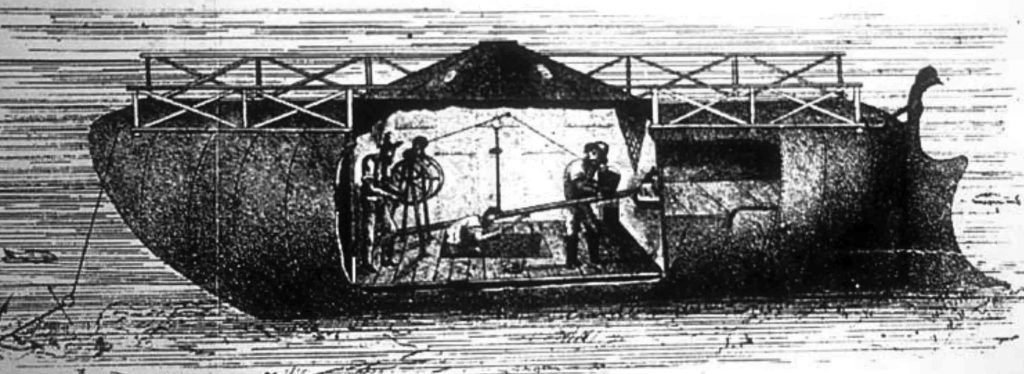
It wasn’t the most streamlined affair. According to a December 1873 report in the Otago Daily Times, “of the many objects animate or inanimate, to which this submarine-thing has been likened, it bore a closer resemblance to a large steam boiler fitted with paddlewheels than to anything else.”
We need your help
READ MORE
The Platypus launched on December 13, 1873, in Dunedin Harbour. “Contrary to the expectation of some people”, the ODT gleefully reported, it not only floated “but floated right side uppermost”.
Other than staying upright, the submersible wasn’t a smashing success. There wasn’t enough current in the harbour to run the wheels, so four extra hands were needed on – or below – deck to manually operate the pumps. As the Tuapeka Times explained, “the extra quantity of air required for seven instead of three, and a slight leak in the air-lock door, prevented there being obtained a sufficient pressure to enable her to rise to the surface as buoyantly as on a former occasion, and necessitated the involuntary imprisonment for four hours of the inmates.”
Nonetheless, no one died, and the Platypus was deemed “well adapted for extracting hidden golden treasures.”
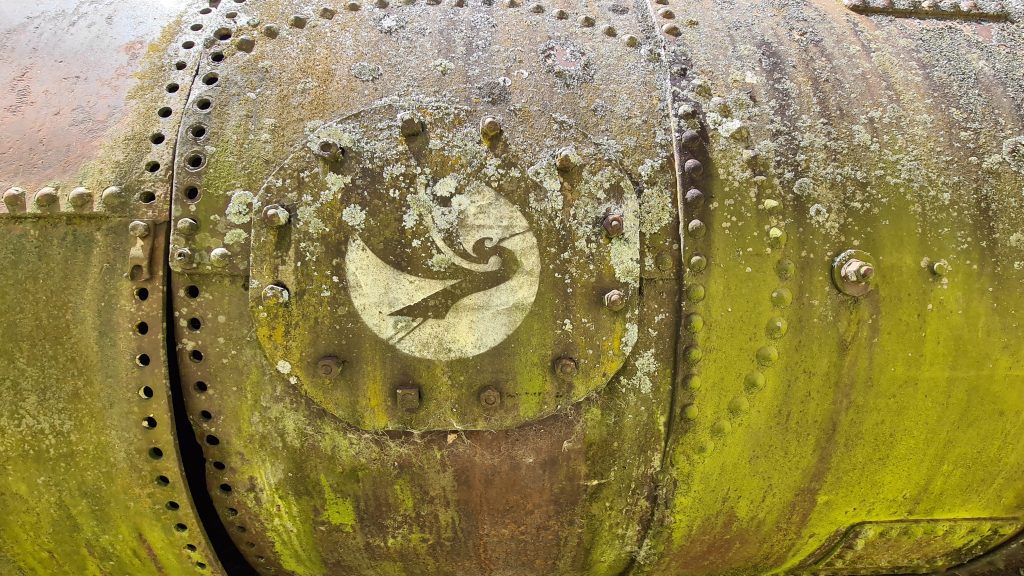
Unfortunately, the New Zealand Submarine Mining Company went bust before any treasure-extracting could begin. New Zealand’s first foray into subaqueous tech spent the next several years rotting on the Ōtepoti foreshore before it was snapped up by McLeod’s Soap Works, where its hollow body was used as a rendering tank. It was then cut into three pieces, two of which were sold to a farmer, who donated the now- truncated sub to the Middlemarch Museum in 1991.
(The mid-section is still AWOL. Have you seen it? It’s about 2.2 metres in diameter and 3.5 metres long. The museum would love to have it back.)
Even without its midsection, the Platypus is something. Perched on grass next to the museum like a steampunk cigar, the thing is a semaphore signalling the lost optimism of the Victorian era. That time when technology was the answer to happiness, and all that glittered was gold.
LAURA WILLIAMSON
Find the Platypus in the lovely town of Middlemarch, located at the southern end of the Strath Taieri, an hour inland from Dunedin via State Highway 87. Middlemarch is at eastern end of the Otago Central Rail Trail.
